The Imperative of Data Capture
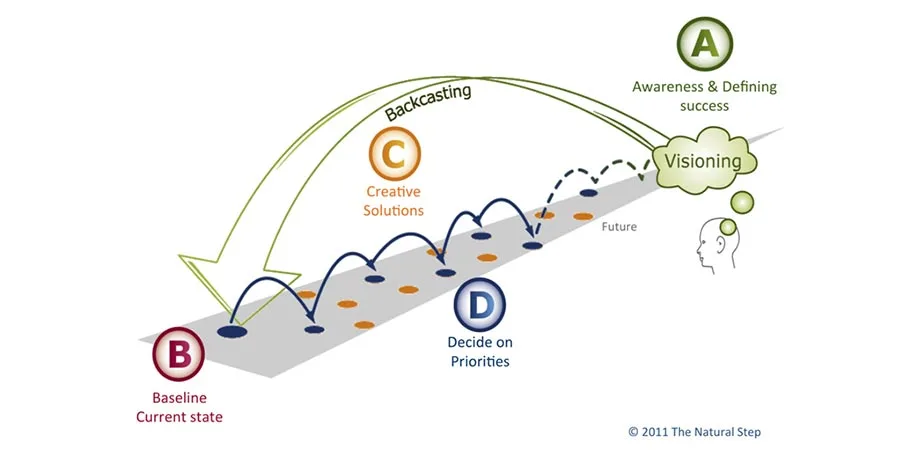
In our previous discussion on Backcasting, we explored the power of working back from a clear vision: defining a vision and creating a step-by-step roadmap to get there. Moving from a strategic vision to real-world financial savings requires one essential ingredient: empirical data.
 Ken Nunes 9 November 2026 3 min read
In our previous discussion on Backcasting, we explored the power of working back from a clear vision: defining a vision and creating a step-by-step roadmap to get there.
Moving from a strategic vision to real-world financial savings requires one essential ingredient: empirical data.
Without accurate, verifiable data capture, even the most ambitious utility strategy will remains a set of good intentions. However, with clear data monitoring, school leadership gains the evidence needed to make confident informed decisions, which prioritise high-ROI maintenance, and defines the strategy to achieve the vision.
The Empirical Proof: A 16-School Data Study
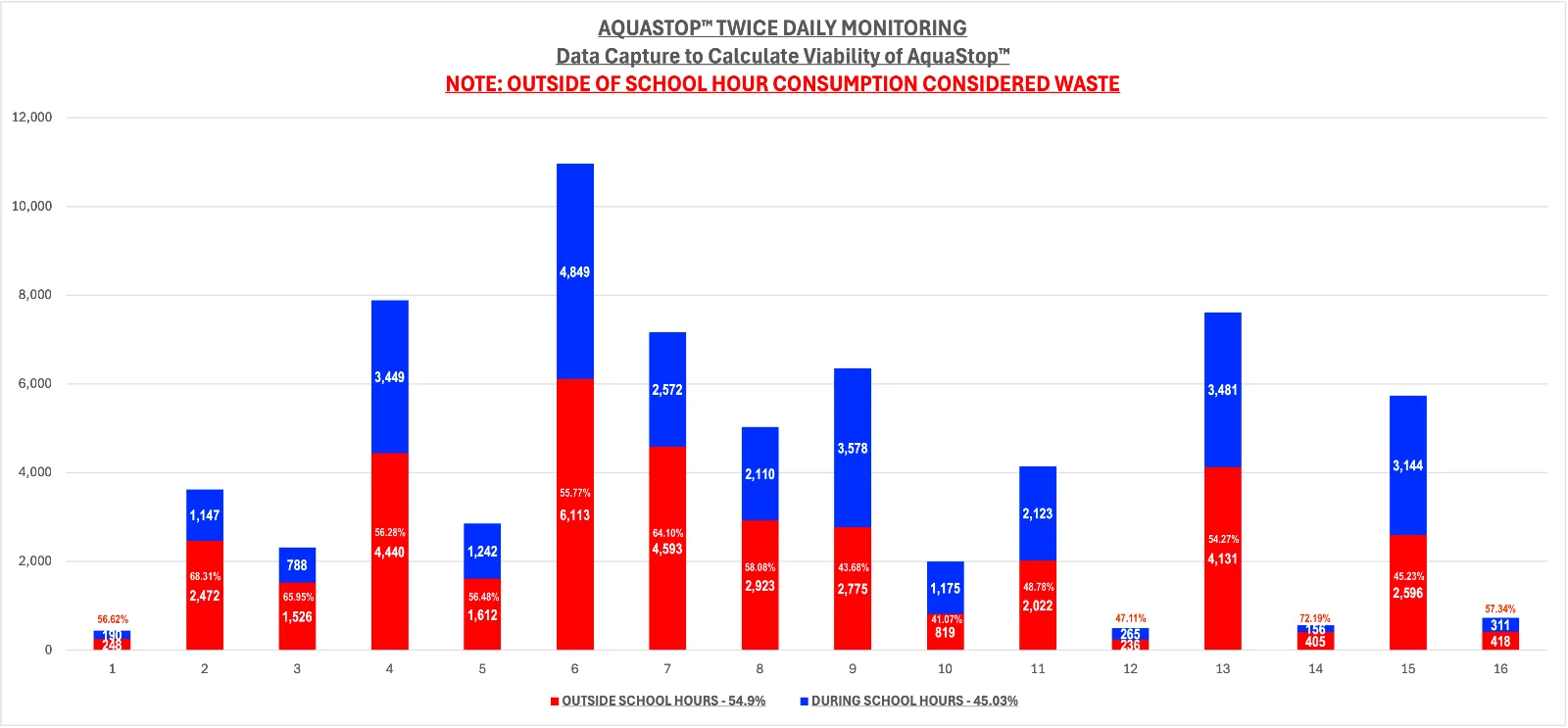
During the development of our AquaStop™ water saving system, Suntricity conducted an extensive water monitoring study across 16 Johannesburg Primary schools. By taking twice-daily meter readings—once at the start of the school day and once at the end—we were able to separated water use into two distinct categories:
During School Hours (Daytime Usage): Water consumed for active learning, sanitation, catering, and all operational activities.
Outside School Hours (Night, Weekend & Holiday Usage): Water consumed when when the schools is closed, gates are locked, and no learners or staff are on site.
NOTE: Based on the SA Department of Basic Education publishes the official school calendar annually, schools are closed for approximately 160 to 170 days a year (including weekends and holidays) plus 12 to 14 hours every school night (5/6pm to 6/7am) , over 70% of the calendar year consists of Outside School Hours. Programmatically isolating these time periods gives school leadership a clear picture where unnecessary expenditure can occurs.
The aggregated results of the study reveal an extraordinary opportunity for intervention: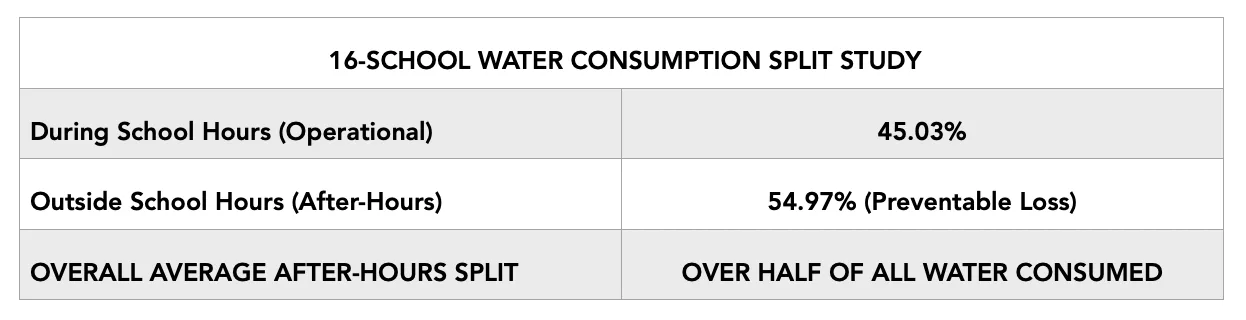
Across the 16 schools audited, an average of 54.97% of total water consumption occurred outside of school hours. In the most severe cases, the individual schools were consuming 68% to 72% of their monthly water invoiced, during the hours they were closed.
Turning Data into Financial Opportunity
Seeing this data for the first time can therefore be a moment of total clarity for School Governing Bodies (SGBs) and Bursars.
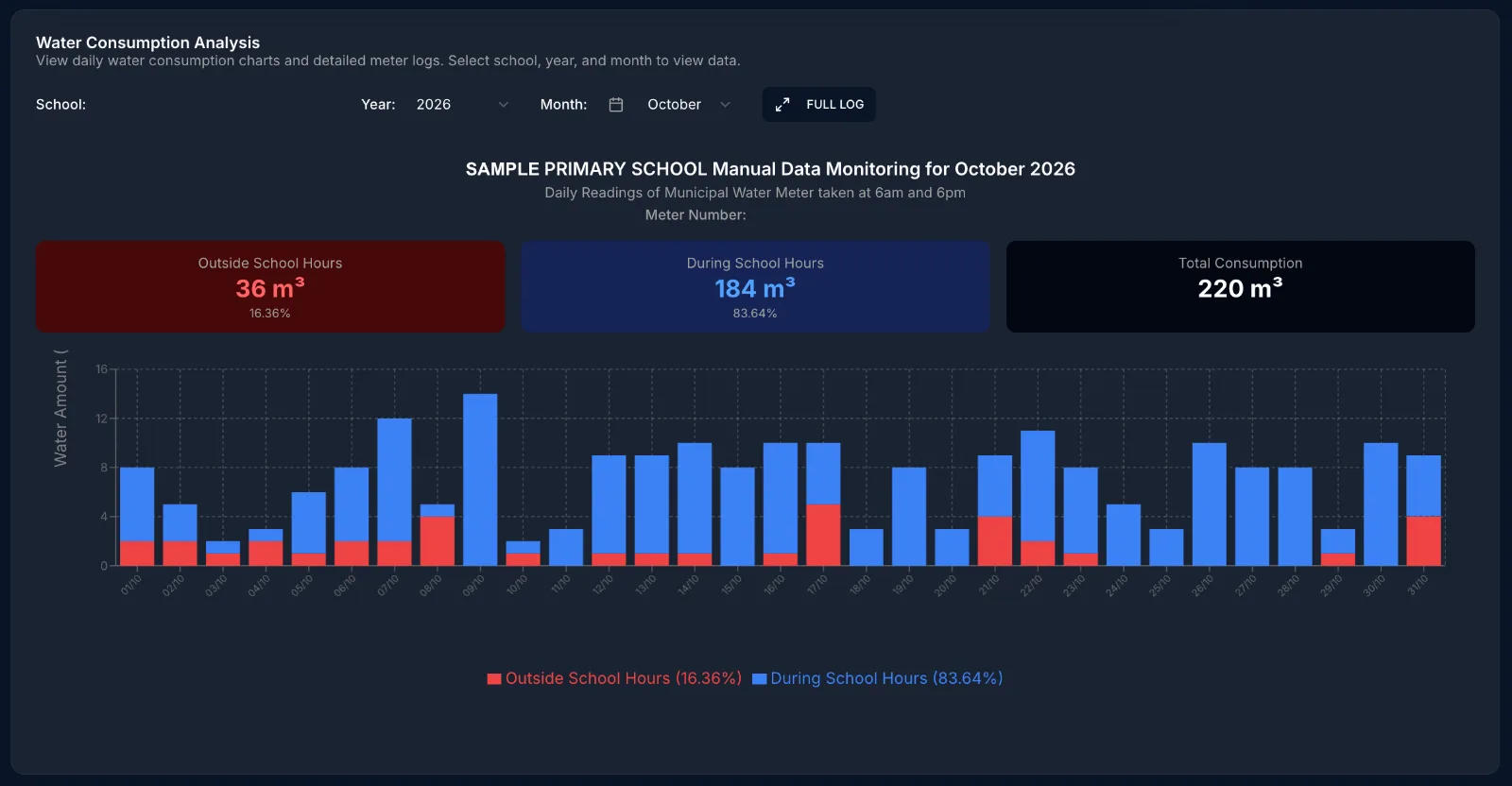
When a monthly municipal invoice arrives, it provides a single, aggregated total. It cannot tell you when the water was used. A school might assume its R50,000 monthly bill is simply the cost of serving 1,000 learners.
However, twice-daily data capture instantly reveals the truth: over R27,000 of that monthly bill is lost during the long nights, which will immediately trigger investigations.
Data monitoring turns a previously unknown operational drain into a clear, solvable target:
Instant Visibility: You immediately isolate daytime needs from overnight waste.
Targeted Maintenance: Maintenance teams can focus their efforts directly on the root causes of overnight flow, immediately identifying problems and budget priorities.
Audit-Ready Evidence: Timestamped meter data gives finance committees proof when verifying municipal billing accuracy.
The Low-Friction Approach to Data Capture
Historically, obtaining interval data meant investing in electronic smart meters and data loggers hardware, digging trenches, installing pipes, and managing ongoing technical maintenance.
Through Suntricity’s Snap, Send, Save workflow, data capture is seamless. Estate staff simply take a photo of the municipal water meter on a smartphone at 06:00 and 18:00 and send it to Suntricity’s App via What’sApp.
Our system uses AI optical character recognition paired with human-in-the-loop verification to transform those images into clean, executive-level dashboard analytics. Zero hardware, zero complexity, and complete data integrity.
Empowering SGB Leadership Through Proof
Data monitoring is the link between backcasting a vision and realising financial gains. When leadership can see their daily consumption profiles, making strategic decisions becomes natural, transparent, and most certainly rewarding.
When initial data tracking reveals quick, measurable savings, progress becomes contagious. Principals, SGB Treasurers, and Estate Managers gain the confidence of knowing their decisions are backed by empirical proof—ensuring every Rand saved on utilities is a Rand reinvested directly into further improvements of the schools’ infrastructure.
Start measuring what matters today. Join the Suntricity Network to activate your twice-daily monitoring baseline, and turn your school's data into lasting financial strength.
Was this article helpful?